
ON NATURE’S DOORSTEP – NOKKEN Q&A
Founded in the UK by designers and hotel specialists Nathan Aylott and James Van Tromp, Nokken is redefining outdoor hospitality. Its modular cabins combine boutique, hotel-grade interiors with an immersive closeness to nature - a deliberate alternative to urban hotels and cookie-cutter travel chains, where luxury and wilderness exist in the same breath.
We spoke to Aylott about the future of hospitality, designing emotional experiences in nature and why details matter more than ever.

Tell us about Nokken.
Nokken was founded by me, Nathan Aylott, and James Van Tromp – creator's and hotel designers with more than two decades of experience across hospitality, brand, and spatial design. Before Nokken, we worked extensively with mainstream and luxury brands including, Land Rover, Tag Heuer, Porsche, Nike and Rolls-Royce, and then, through our sister studio, Aylott + Van Tromp (AVT) went on to specialise in the world of hospitality. The idea for Nokken grew directly out of that experience. Over time, we noticed that hospitality often lacked the joined up thinking you see in retail or premium brand environments. Many hotels felt overly decorative, inconsistent, or disconnected from what modern guests wanted from an experience.Nokken became our response to that gap – a more considered, experiential, and design-led approach to hospitality in nature. About five years ago, while working with a major hotel group, we began questioning whether there was a better way to build hospitality. Traditional hotel development required enormous investment, long lead times, and highly invasive construction. That process sparked a much smaller but more radical idea: what if hospitality could move closer to nature through offsite-built, design-led structures that still delivered a boutique hotel experience? Using our existing hospitality skillset, we began translating hotel thinking into modular architecture. Our view was simple: if you can build a hotel conventionally, why can’t you build it sustainably offsite and place it sensitively within a landscape? Nokken is also the first thing we’ve designed entirely on our own terms, without directly working for a brand or to a third-party brief. This was completely self-generated and therefore the result is something we see not simply as a cabin, but as a tool for hospitality.

You’re offering more than just the cabin itself, right?
The purpose of Nokken has always gone beyond simply building cabins. We exist to give hotel operators and landowners the most efficient and commercially viable route into retreat hospitality through a single commercial relationship. The cabin is the product, forged from the real world experience of building real hotels - the platform is the offer. That platform is what differentiates us from conventional modular cabin suppliers. At its foundation sits hotel-grade architecture and design, supported by an operator services layer that includes brand identity, marketing, interior design, and technology integrations. Much of this expertise comes directly from Aylott + Van Tromp, alongside a curated network of hospitality-focused partners. In practice, that means an operator can come to Nokken and leave with more than a physical structure. They leave with a functioning, branded, market-ready hospitality business – without sacrificing their brand identity, margin, or land ownership. Every element of the ecosystem is designed to make hospitality businesses more profitable, scalable, and operationally streamlined.
Talk us through where hospitality is heading right now and where Nokken fits in.
We think hospitality is moving away from traditional ideas of luxury and toward experience-led stays rooted in nature, design, and emotional connection. Our own journey into hospitality was almost accidental. Coming from mainstream brand and automotive work, we often found luxury hospitality environments too focused on surface-level signals of luxury – more gold taps rather than genuinely meaningful experiences. That pushed us toward a different vision of hospitality: one that prioritises atmosphere, simplicity, tactility, and connection to landscape over overt opulence. At the same time, guest expectations have evolved dramatically. Travellers increasingly choose accommodation based on design, aesthetics, and uniqueness of experience. Nature-based hospitality, wellness retreats, and landscape-led stays are becoming a much larger part of the market, but operators still need commercially dependable infrastructure. That’s where we fit in. Rather than treating cabins as lifestyle objects or architectural one-offs, we approach them as scalable hospitality infrastructure – what we call “hospitality hardware”. The cabins are designed to help hotel groups, retreat businesses, agritourism sites, and wellness operators expand into nature-based hospitality in a practical and commercially viable way.
Explain the hospitality style and commercial-grade approach. Why are adaptability and scalability important in today’s market?
Guests increasingly expect boutique-hotel-level design and comfort, regardless of whether they’re staying in a forest, desert, or coastal retreat. We built Nokken around meeting those expectations from the moment someone arrives. Every detail is specified to hospitality-grade standard. We use commercial-grade materials, premium FF&E, architectural hardware, and high-spec finishes throughout – the same kinds of fixtures you’d find in leading boutique hotels. Durability and ease of maintenance are just as important to us as aesthetics. Adaptability is built into the architecture itself. The cabins sit on helical screws or minimal foundation pads with little to no permanent landscape impact and can be removed entirely if needed. Our construction system allows configurations far beyond a standard cabin footprint, including studio suites, multi-bedroom lodges, spas, gyms, restaurants, and even treehouses.
We currently have fifteen base footprints, but the system is designed to expand and adapt depending on site conditions and operational needs. Scalability naturally follows from that flexibility. Operators can begin with two cabins and scale to twenty without compromising the guest experience or redesigning the entire infrastructure strategy. For operators, that creates commercial confidence. For guests, it creates consistency and quality at any scale.

What does Nokken mean by “hospitality hardware”?
We use the phrase “hospitality hardware” to clearly position ourselves within the market.
We never wanted to become another cabin company, garden room brand, or one-off architectural concept. We see our product as a practical tool for hospitality operators. The cabins are designed to help hotel groups, retreat businesses, agritourism sites, and wellness operators expand their offering in a scalable and commercially useful way. The emphasis for us is on creating something operationally dependable – a product that can slot directly into an existing hospitality business model while still carrying strong design credentials.
Walk us through the design and architecture of the cabins. Were there specific influences behind the design?
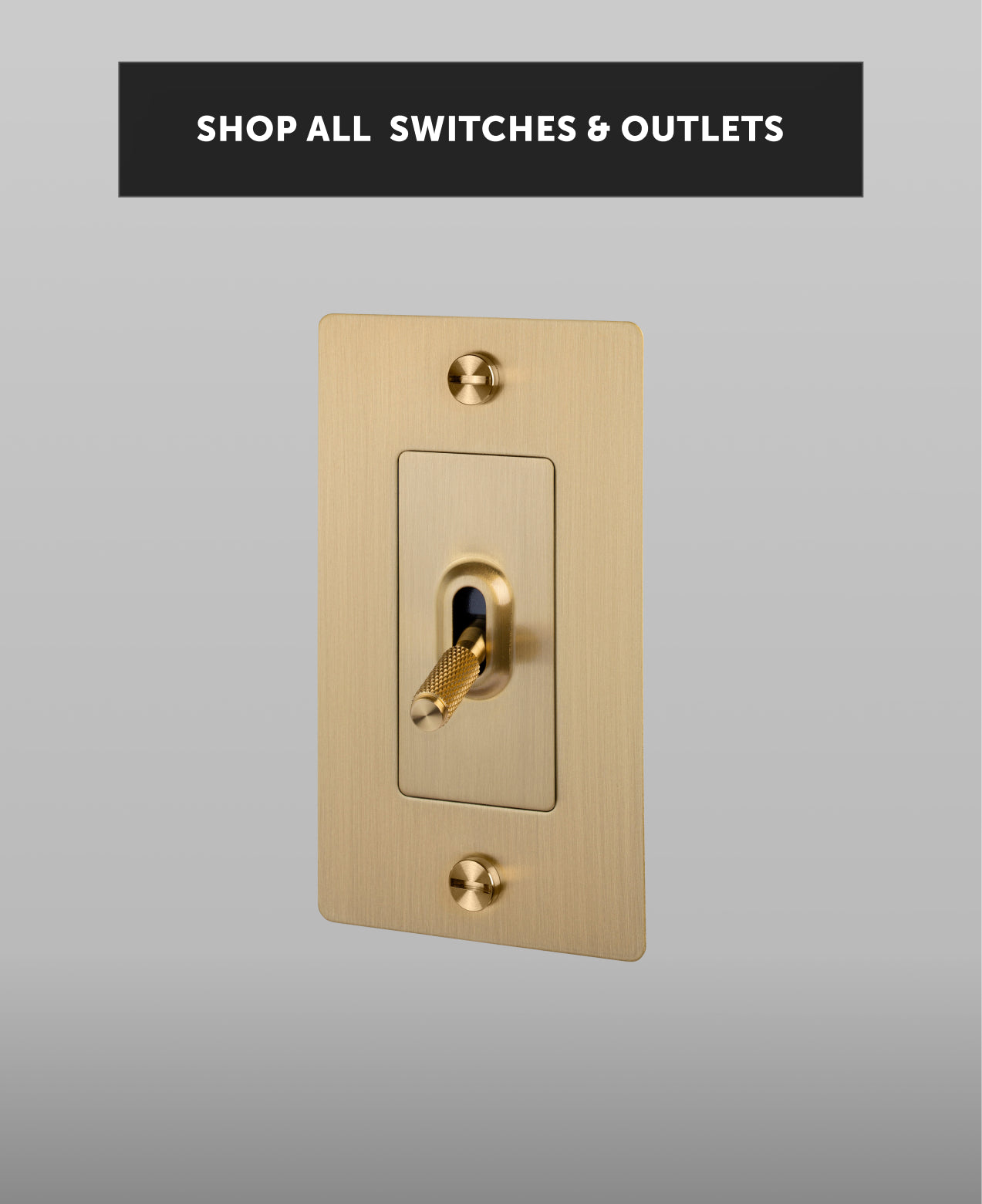
The starting point for us wasn’t the cabin market at all – it was the hotel room. We took the core logic of a high-quality hospitality suite, roughly 30 square metres, and translated it into a modular structure suited to remote and nature-based environments. The priorities were simple but deliberate: a large window to maximise the landscape view, a carefully positioned bed, a strong bathroom experience, somewhere to cook, and the everyday comforts guests expect from a boutique hotel stay. We never wanted survivalist minimalism. Our belief is that while people want immersion in nature, they still want comfort, warmth, convenience, and thoughtful design. Aesthetically, the size and use case of each project influences how the cabins evolve. The platform itself is highly adaptable, allowing skins, finishes, and material palettes to change depending on climate, landscape, or brand identity. Lighting also plays a major role in shaping the atmosphere. Our approach is intentionally soft, warm, layered, and tactile rather than highly digital or over-automated. We consciously avoid “techifying” the experience too much because we think excessive technology can sterilise spaces and diminish the emotional connection to nature. That preference for tactile interaction extends into the details. The light switch is often the first thing someone touches when entering a room, so physical interaction and material quality become incredibly important to the experience.
There’s a real attention to detail in the interiors. What was the intention behind this approach?
For us, touch and tactility are central to how a space feels emotionally. The cabins are designed for high-volume hospitality use, so every material and fitting has to perform operationally while also contributing to a sense of warmth, craft, and permanence. We believe quality materials matter partly because they last longer, but also because they create a stronger sensory connection to the space. The intention was to push the cabins as far as possible in terms of refinement and atmosphere without losing their simplicity or relationship to nature. That balance between boutique hospitality polish and emotional warmth sits at the centre of our interiors approach.
How important are lighting and hardware within the cabins?
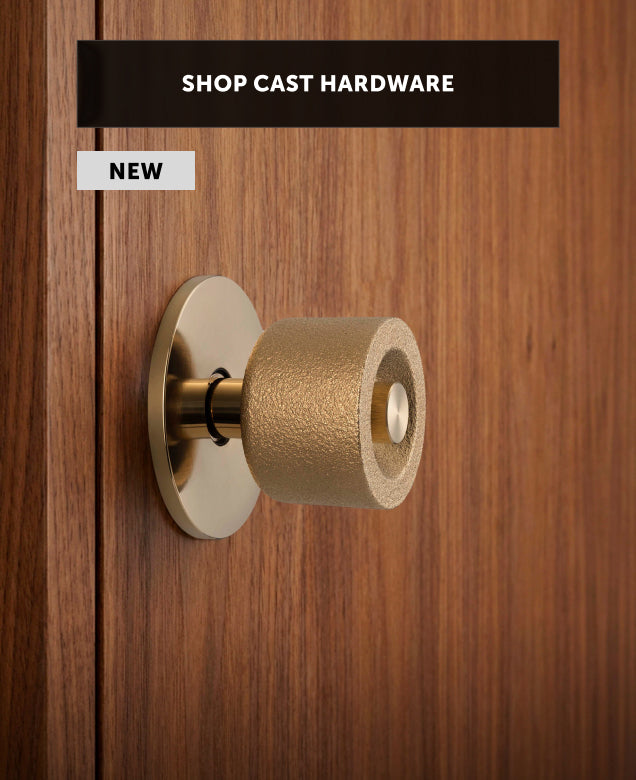
Lighting is part of the emotional architecture of the cabin for us. We’re not interested in bright, overly technical illumination. The goal is something softer and more layered – warm, simple, and intuitive. That thinking naturally aligned with Buster + Punch. We were drawn not only to the aesthetic flexibility of the hardware, but also to its physicality and tactility.
We particularly value the feeling of interacting with a real switch rather than a digital interface. Those small tactile moments shape the first impression of a space and reinforce the analogue, grounded atmosphere we want the cabins to have. We also liked the adaptability of the Buster + Punch range across different finishes and material palettes, allowing the hardware to evolve alongside different regional or client-specific specifications.

What are the cabins made from and how are they built to last?
The cabins are primarily constructed using FSC-certified timber and high-performance insulation systems selected for both environmental credentials and structural integrity.
The external walls combine FSC timber cladding, ECOWool insulation, waterproof and wind barrier membranes, and thermally treated timber designed to perform across a range of climates. Roof systems follow the same principles, while triple-glazed alu-clad timber windows and doors complete the building envelope. Internally, we use FSC timber cladding, engineered oak flooring, and underfloor heating throughout. We also work with glulam or CLT structural frames, eco wall or pulp insulation, and solid surface materials from brands such as Cosentino and Neolith. What ultimately ensures longevity is the layered combination of breathable, highly insulated, weatherproofed materials built to hospitality-grade standards rather than lightweight domestic standards.
Nokken cabins are modular. How bespoke can a client go?
While the cabins share a consistent architectural language, every project is effectively bespoke. The modular system begins at the structural level through a panel-based build methodology that allows significant flexibility in layout and configuration. We also developed the NKN-KONEKT module – a corridor element that can connect multiple structures together for larger hospitality formats. Beyond the structural system, facades, layouts, materials, finishes, and operational functionality can all be adapted to suit a client’s brand identity, market, climate, or site conditions. That flexibility is essential because each region brings different regulatory and environmental demands. We’ve dealt with wider doorway requirements in Portugal, wind-loading conditions in New Zealand, and native timber considerations in Australia, for example. The result is a hospitality product that can be tailored to almost any operational brief without the cost and lead time typically associated with fully bespoke architecture.
Who is the audience for Nokken and how’s the reception been so far?
Our primary audience is hospitality operators rather than individual consumers. That includes first-time founders launching retreat businesses, established boutique hotel groups scaling their portfolios, agritourism operators diversifying land use, and institutional hospitality brands exploring landscape-led accommodation formats. Landowners also form a significant customer group, particularly where removable, low-impact foundations are commercially or environmentally advantageous. Beyond direct customers, there’s also a wider cultural audience around the brand – architects, designers, hospitality investors, and developers who influence how the category evolves and how Nokken is perceived within the industry. The reception so far has reflected that broad appeal. We currently have projects underway in locations ranging from cliffside bays in New Zealand to desert developments in the United Arab Emirates, alongside an RV-style Nokken model launching in the United States designed specifically around American towing and road-use conditions.


